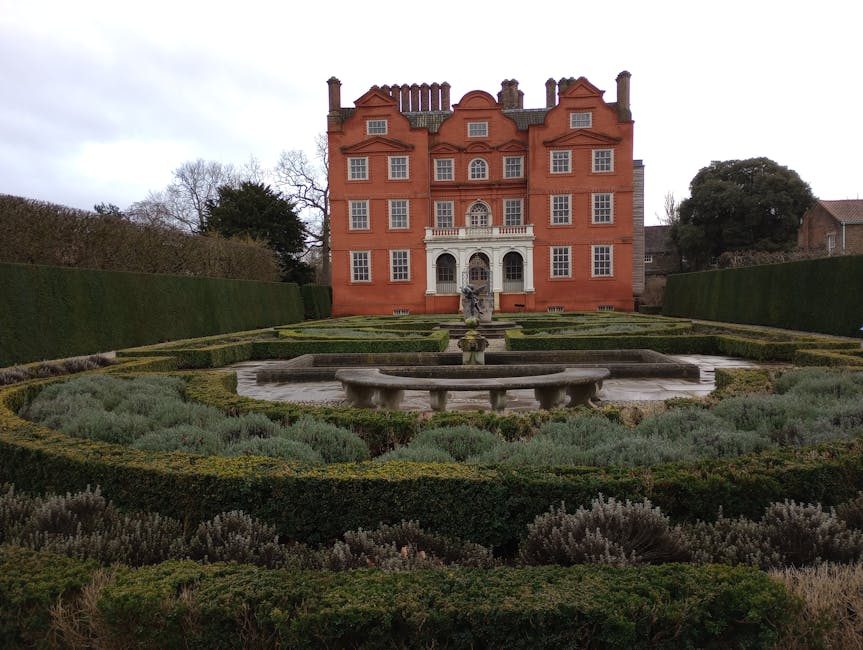
Addington Palace inspired garden maintenance guide New Addington

If you want a garden that feels composed, timeless, and a little bit grand without becoming high-maintenance, this Addington Palace inspired garden maintenance guide New Addington is for you. The idea is simple: borrow the calm structure, seasonal richness, and formal balance associated with palace-style planting, then adapt it to everyday gardens in New Addington. That means less fuss, better shape, and a garden that still looks good after a blustery week, a dry spell, or one of those sudden downpours we all know too well.
In practice, it is less about copying a historic estate and more about using its principles well: clean lines, healthy lawns, layered evergreens, disciplined hedging, and planting that stays attractive through the year. Let's face it, most gardens do not need more complexity. They need a better rhythm.
Why Addington Palace inspired garden maintenance guide New Addington Matters
Palace-inspired gardens tend to work because they respect structure. A clipped edge here, a formal path there, a repeated planting scheme that makes the whole space feel intentional. That matters in New Addington, where gardens often need to cope with changing weather, practical family use, and limited time for upkeep. A garden that is well maintained will usually look more expensive, more settled, and frankly more inviting, even if it is quite simple underneath.
There is also a subtle benefit: the style encourages maintenance rather than rescue work. Instead of waiting until the lawn has thinned, the hedge has gone shaggy, and the borders have turned into a small battlefield, you work with small, regular tasks. That is the real secret. Tiny corrections, done often, are far easier than heroic weekend repairs.
For homeowners who want a polished finish without constant redesign, this approach is particularly useful. It can support a classic family garden, a neat front space, or a larger plot that needs better visual discipline. If your garden currently feels a bit chaotic, this style gives you a clear way back to order.
How Addington Palace inspired garden maintenance guide New Addington Works
The approach works by combining formal garden maintenance with seasonal realism. You are not chasing perfection. You are building a structure that can absorb normal wear and still look composed. Think in layers: the framework, the surface, the accents, and the maintenance rhythm that keeps everything in place.
In practical terms, that usually means:
- keeping hedges clipped to defined shapes rather than letting them drift
- maintaining a clean lawn edge so borders and turf feel separated
- using evergreen planting for year-round body and colour
- keeping patios, paths, and seating areas clean and clear
- selecting plants that tolerate local weather and do not need constant rescue
It also means thinking about how the garden is viewed. Palace-style gardens are often experienced in stages: a first impression at the gate, a mid-distance view across planting, then the details up close. Your own garden can do the same. A clipped hedge can create a frame, a well-kept lawn can lead the eye, and a few recurring plants can create calm repetition.
If you want a useful read alongside this guide, the visual guide to shaping hedges is a strong companion piece, especially if your main priority is a sharper outline. For year-round resilience, weatherproofing your garden is also worth a look.
Key Benefits and Practical Advantages
The appeal of a palace-inspired maintenance style is not just visual. It makes everyday gardening easier to manage. Once the main structure is in place, the whole garden becomes more predictable. Predictable is good. Predictable means less stress when the weather turns, less overgrowth after a holiday, and fewer moments where you stand at the back door thinking, "Right. Where do I even begin?"
- Better year-round appearance: evergreen structure and neat edges keep the garden looking cared for in winter as well as summer.
- Lower long-term workload: regular upkeep is easier than periodic heavy restoration.
- Stronger visual balance: repeated shapes and disciplined planting make even modest spaces feel more spacious.
- More usable outdoor space: a clean, organised garden is simply nicer to sit in, walk through, and enjoy.
- Improved resilience: well-chosen plants and sensible maintenance reduce the impact of wind, rain, and dry periods.
One practical bonus is that structured gardens often help people spot problems earlier. A broken branch stands out. Bare patches in the lawn are easier to notice. Weed pressure becomes visible before it spreads. That early visibility saves time and money, and to be fair, it saves a lot of frustration too.
For many households, the simplest win is this: the garden starts to feel finished. Not fussy. Finished.
Who This Is For and When It Makes Sense
This style suits a wide range of gardens, but it is especially useful if you want order without turning your outdoor space into a formal museum piece. It works well for busy families, professionals with limited time, and homeowners who are preparing a property for sale or simply want better kerb appeal.
It can also make sense if your garden has one or more of these issues:
- hedges that have grown uneven or patchy
- a lawn that looks tired at the edges
- borders that feel cluttered rather than planted
- a patio or seating area that gathers debris quickly
- planting that looks good in spring but falls flat later in the year
In small gardens, the style creates discipline and the impression of space. In larger gardens, it helps divide the area into clear zones. And if your garden has pets or children, this approach can still work, provided you soften the edges and choose durable plants. The trick is not to over-formalise everything. You want elegance, yes, but you still need people to live in it.
If you are planning a wider refresh, the article on kick-off steps for a garden makeover fits neatly with this way of thinking. For small outdoor spaces, budget-friendly landscaping ideas can help you keep the project sensible.
Step-by-Step Guidance
Here is the part where a lot of guides get fluffy. Let's keep it grounded. If you want an Addington Palace inspired look without overcomplicating things, follow a maintenance sequence that builds from the outside in.
- Assess the structure. Stand back and look for the main lines: hedges, lawn edges, beds, paths, walls, fences, and focal points. Ask yourself what the eye sees first.
- Clear the clutter. Remove dead foliage, broken pots, loose debris, and anything that interrupts the clean geometry. A tidy garden instantly feels more intentional.
- Define the edges. Re-cut borders and lawn edges so the difference between surfaces is obvious. Crisp edges do a lot of heavy lifting.
- Shape the hedges. Trim hedges for symmetry and density. If privacy matters, choose forms that stay full lower down rather than becoming bare-legged.
- Refresh the lawn. Mow consistently, feed where needed, and keep an eye out for compacted patches. If the lawn is central to the design, it should not be an afterthought.
- Balance the planting. Use shrubs and perennials in repeated groups rather than scattering too many different plants. Repetition calms a space.
- Introduce evergreen anchors. Evergreens give the garden shape in colder months. They are the backbone, basically.
- Maintain hard surfaces. Clean patios, sweep paths, and clear moss or algae where it becomes slippery.
- Finish with seasonal refinement. Swap bedding plants, mulch borders, and add subtle accents rather than changing the whole scheme every few months.
One small but important point: do not try to do everything in a single afternoon. The garden will usually tell you what it needs first. Start with the most visible fault line. Then keep going.
Expert Tips for Better Results
Experience teaches you that maintenance quality often comes down to timing. A hedge trimmed at the right moment stays neater for longer. A lawn cut too short fights back. A border cleared before weeds seed saves hours later. These are small choices, but they add up quickly.
- Trim for shape, not just size. The aim is a balanced outline, not simply reducing volume.
- Use evergreen structure sparingly but deliberately. A few strong specimens often look better than a crowded mix.
- Mulch after weeding. It helps lock in moisture and slows repeat weed growth.
- Give hard landscaping the same attention as planting. A clean patio or path can lift the whole garden.
- Think in sightlines. What looks good from the kitchen window may need different treatment from the boundary edge.
- Do a five-minute scan after windy weather. You will often catch damage before it spreads.
For windy locations, it is worth reading how to design a garden that thrives in windy conditions. That advice pairs well with palace-inspired maintenance because some of the most elegant gardens are also the most resilient.
And if your planting is going to work hard through the colder months, evergreens taking centre stage is a useful principle to borrow. Quietly effective. No drama. Just reliable structure.
Common Mistakes to Avoid
People often assume formal maintenance means more pruning, more clipping, and more strictness. Not quite. Overworking a garden can make it look harsh and oddly tired. The goal is control with softness, not rigidity for its own sake.
- Cutting hedges too hard. Severe cuts can leave gaps or weaken growth, especially if done at the wrong time.
- Ignoring the soil. A polished surface means little if the ground underneath is poor or compacted.
- Using too many plant types. Too much variety can break the calm, structured feel.
- Letting weeds become a border feature. A few weeds are normal; a whole wave of them is a maintenance issue.
- Forgetting winter interest. A garden that looks only good in peak season will feel bare half the year.
- Making every area equally formal. Some parts need function first, especially family or pet zones.
One common mistake I see, especially in smaller New Addington gardens, is overfilling the space because everything looks nice in isolation. That rarely works. If a border, a hedge, a seating area, and a feature pot are all shouting at once, the whole thing loses its calm.
If weeds are a recurring battle, targeted weed control tips are far more useful than a blanket approach. Precision beats panic, every time.
Tools, Resources and Recommendations
You do not need a shed full of specialist kit to maintain a palace-inspired garden, but you do need the right basics. Good tools make maintenance cleaner, safer, and much less annoying. Nobody enjoys a blunt pair of shears. Nobody.
| Tool or resource | Best use | Why it helps |
|---|---|---|
| Hedge shears or trimmer | Shaping hedges and topiary-style lines | Keeps formal edges neat and consistent |
| Edging tool | Defining lawn and border lines | Sharpens the whole layout instantly |
| Rake and leaf grabber | Clearing debris from lawns and paths | Maintains a clean, well-kept finish |
| Secateurs | Deadheading and light pruning | Useful for precise plant care |
| Mulch or compost | Border refresh and moisture retention | Supports healthier growth and a tidier look |
For a broader toolkit overview, this guide to essential garden tools is a practical read. If you are also aiming for a softer ecological finish, ground cover ideas can help suppress weeds while keeping the planting scheme elegant.
You may also find value in organic waste as a garden activator and purpose-led gardening if you want the garden to be both attractive and environmentally thoughtful.
Law, Compliance, Standards, or Best Practice
For most homeowners, the compliance side of garden maintenance is straightforward, but it is still worth handling properly. If you are using contractors, ask about insurance, public liability cover, and how they manage safe working practices. That is not overcautious; it is sensible. The same applies if work involves ladders, power tools, or tree-related tasks near boundaries.
In the UK, good practice usually means clear communication about access, waste removal, plant protection, and any potential impact on neighbouring properties. If trees are involved, the work should be approached carefully, especially where branches overhang, roots spread, or height becomes a concern. Some jobs are routine maintenance; others can quickly become more technical than they first appear.
For that reason, it helps to review trusted service information such as insurance and safety and the site's health and safety policy before booking more involved work. If a project includes major pruning or a tree that is clearly beyond simple maintenance, tree surgery support may be the more appropriate route.
There are also practical commercial details worth checking in advance, such as pricing and quotes, payment and security, and the relevant terms and conditions. None of that is glamorous, obviously, but it keeps everyone on the same page.
Options, Methods, or Comparison Table
Different gardens need different levels of maintenance. A palace-inspired look can be created in a few ways, depending on budget, available time, and how formal you want the finish to feel.
| Approach | Best for | Pros | Trade-offs |
|---|---|---|---|
| Light-touch formal maintenance | Busy households and smaller gardens | Easy to keep up, tidy appearance, lower effort | Less dramatic visual impact |
| Structured planting with evergreen anchors | Gardens needing year-round interest | Strong winter presence, reliable shape | Requires thoughtful plant selection |
| Higher-formal, clipped design | Large spaces or front gardens | Elegant, clear and highly polished | Needs regular upkeep and careful pruning |
| Mixed-use garden with formal bones | Family gardens with play or seating areas | Balances beauty with practicality | Needs more planning to avoid clutter |
There is no single right answer here. A good garden is one that fits your life, not one that demands you rearrange your life to suit it. Slight difference, but an important one.
Case Study or Real-World Example
Imagine a typical semi-detached New Addington garden that has a decent footprint but no clear structure. The lawn has soft edges, the hedge is a bit lopsided after years of quick cuts, and the rear patio collects leaves every week. Nothing is broken. It just feels unfinished.
A palace-inspired maintenance reset would usually start with boundaries. The hedge gets reshaped so it rises evenly and gives privacy without bulking out. The lawn edges are redefined. The patio is swept and washed so the hard landscaping stops looking tired. A pair of evergreen shrubs are added to anchor the back boundary, while the borders are simplified into repeating groups rather than a mixture of one of everything.
The result is not flashy. It is calmer. The garden suddenly reads as designed rather than accidental. On a grey afternoon, when the light sits low and the air has that cool, damp edge to it, the space still looks considered. That is the real test, honestly.
To support a project like that, a homeowner might pair routine care with inspiration from inviting seating concepts and even borrow ideas from zen garden design for quieter corners. The mix can be lovely if you keep the overall structure disciplined.
Practical Checklist
Use this quick checklist before and during your next garden maintenance session. It keeps the process simple, which is half the battle.
- Check hedge lines for uneven growth or gaps
- Cut lawn edges cleanly around borders and paths
- Remove dead stems, fallen leaves, and visible debris
- Inspect evergreen planting for shape and health
- Weed borders before adding fresh mulch
- Clean patio and path surfaces
- Look for drainage issues after rain
- Trim back anything blocking sightlines or access
- Confirm tools are sharp, safe, and ready to use
- Decide what can wait until next week, because not everything has to happen today
If you want to push the design further, consider reading about fast-growing hedges for privacy and protecting plants in winter. Those two topics sit very naturally alongside this kind of maintenance planning.
Conclusion
An Addington Palace inspired garden maintenance guide New Addington is really about creating a garden that feels settled, elegant, and easy to live with. The palace influence comes through in structure, repetition, clean lines, and a preference for planting that behaves well across the seasons. But the New Addington reality matters too: weather, time, budget, and how the space is actually used all shape the final result.
Keep the framework strong. Keep the edges crisp. Use evergreen structure where it matters. And do the small jobs before they become large ones. That is how a garden starts to feel calm without becoming cold, refined without becoming difficult.
If you are planning a refresh or want help turning a tired space into something more composed, the next step is simple.
Get a free quote today and see how much you can save.
And if you need a little reassurance before you begin, remember this: a beautiful garden is rarely built in one go. It is tended into being, one sensible decision at a time.
Frequently Asked Questions
What does an Addington Palace inspired garden actually look like?
It usually means a garden with strong structure, tidy hedges, repeated planting, clear edges, and a balanced layout. It does not have to be formal in a rigid sense. Think elegant and orderly, not stiff.
Is this style suitable for a small garden in New Addington?
Yes. In a smaller space, structure matters even more because it helps the garden feel larger and less cluttered. A few evergreen anchors and neat edges can make a big difference.
How often should hedges be trimmed for this look?
That depends on the hedge type and growth rate, but regular light trimming usually works better than occasional heavy cutting. The goal is to keep the shape consistent rather than chase it after it has overgrown.
Do I need formal topiary to achieve the effect?
No. Formal topiary can help, but it is not essential. A well-maintained hedge, tidy borders, and repeated planting groups often give a similar sense of order without the extra labour.
What are the best plants for year-round structure?
Evergreens are the obvious starting point because they keep shape and colour through winter. You can also use shrubs and hardy perennials that hold their form well. The key is choosing plants that suit the site, not just the style.
How can I keep the garden looking good in winter?
Focus on evergreen structure, clean hard surfaces, and healthy borders. Winter interest comes from shape and texture as much as flowers. A few strong forms will carry the garden through the darker months.
What is the biggest mistake people make with formal garden maintenance?
Usually, it is overcutting or overfilling. Too much pruning can weaken plants, while too many different features can destroy the calm look. Simplicity tends to age better.
Can this style still work if I have pets or children?
Yes, absolutely. You may need to soften some edges, avoid delicate planting near busy areas, and choose durable materials, but the overall structure can still work very well.
Should I focus more on planting or on hard landscaping?
Both matter, but they play different roles. Hard landscaping gives the garden its bones; planting gives it warmth and life. If one is neglected, the whole space can feel off.
How do I know when a task is too much for DIY?
If it involves tall trees, repeated ladder work, heavy machinery, or safety concerns near boundaries, it is wise to get professional help. Some jobs look simple until you are halfway through them. That is usually when people start regretting the Saturday plan.
Is there a budget-friendly way to create this look?
Yes. Start with the highest-impact basics: edge definition, hedge shaping, lawn care, and a small number of evergreen plants. You can build the rest gradually. A good structure first often saves money later.
Where should I begin if my garden feels completely unruly?
Start with clearance, then define the edges, then handle the main structural plants. Once the garden has shape again, the rest becomes much easier to judge. If you want broader practical support, garden maintenance services and related advice can help you map out the next step.